Nobody Posts Anymore — And the Group Chat Is Why

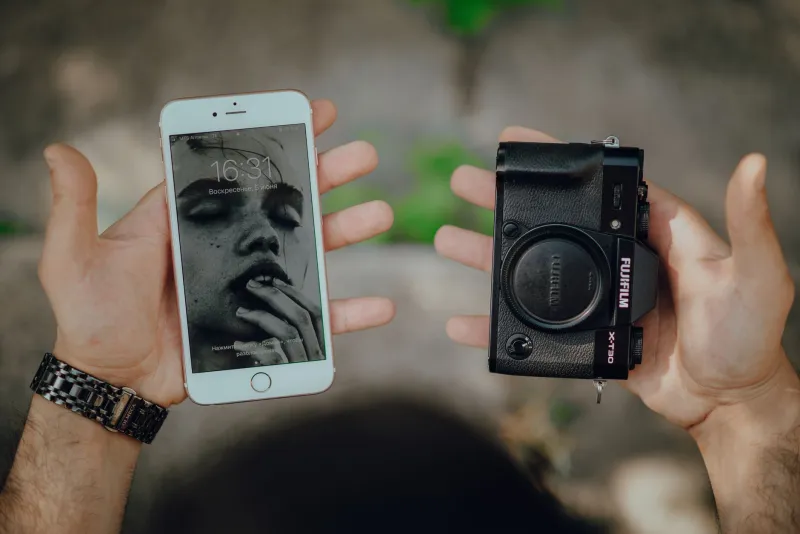
Photo: Thisbe Schultz, CC0, via Wikimedia Commons
Here's a stat that should stop you mid-scroll: the average American teenager now sends and receives well over a hundred texts a day, while posting to public social media has been steadily declining for years. The feed didn't die of natural causes. We packed up our things and moved the party somewhere quieter.
Look at your own behavior. When did you last share a genuine life update publicly? The engagement announcement, the new job, the ugly cry after a hard week — chances are those went to a group chat, not Instagram. The neighborhood hangout, the bowling league, the backyard where everyone ended up on a Sunday — for a huge chunk of Americans, all of it now lives inside a text thread with a ridiculous name and seven people who've seen you at your worst.
The group chat is the new country club. The difference is the membership fee: instead of money, you pay in trust.
The Great Migration Inward
Sociologists have spent a century worrying about the decline of "third places" — the bars, barbershops, churches, and bowling alleys that aren't home or work but hold community together. Ray Oldenburg, who coined the term, feared their disappearance. He was right to worry. But what he couldn't have predicted is that Americans wouldn't just lose their third places. We'd rebuild them, digitally, with room keys.
Discord servers with two hundred members and strict entry rules. Group chats named things like "The Boys 🥶" and "emergency brunch council." Instagram's Close Friends feature, originally designed for celebrities, now functions as a velvet rope for everyone — the green-ring story you only share with your real people. Even TikTok and Snapchat have leaned into private sharing, because the data made it undeniable: people stopped performing for crowds and started talking in rooms.
This isn't just a vibe shift; it's become a business model. A wave of apps now market themselves explicitly on intimacy — smaller audiences, disappearing messages, invite-only communities. The pitch is always the same: the feed is a stage. Come hang out somewhere that isn't one.
What We Gained: The Return of the Unfiltered Self
Ask anyone under 35 why they've gone quiet in public and loud in private, and you'll hear versions of the same answer. The feed became a résumé. Employers check it. Strangers screenshot it. Your aunt comments on it. Posting publicly started to feel less like sharing and more like testifying under oath.
In the group chat, meanwhile, you can be a whole person. You can say the unhinged thing, ask the embarrassing question, admit you're struggling, or send a photo of your grocery haul shaped like a cry for help. There's no algorithm deciding who sees your vulnerability. There's just your people, and the implicit contract that what's said in the chat stays in the chat.
There's real research behind this instinct. Studies on self-disclosure consistently find that closeness grows through reciprocal, low-stakes sharing — exactly the kind of exchange a private thread makes easy and a public post makes risky. In many ways, the group chat is the most honest social space most Americans have.
What We're Losing: The Front Porch
But pull the camera back, and something more complicated comes into focus. Every migration into a private room is, by definition, a departure from a public one. And public rooms — messy, awkward, open to strangers — are where a certain kind of social good gets made.
The old neighborhood hangout didn't just connect friends. It connected acquaintances. The friend-of-a-friend. The neighbor you didn't choose but learned to love. The newcomer who didn't know anyone yet but could wander in. Group chats don't do newcomers well. They're closed by design. You are either in the thread or you are nobody, and America's lonely — the recently moved, the socially anxious, the guy who just moved to a new city for work — can't join a chat they don't know exists.
There's also a fragmentation cost. When a thousand small rooms replace one big square, consensus gets harder. The shared culture that used to come from everyone watching the same show or frequenting the same places now assembles itself in private, in pieces. You can end up with the strange modern condition of being extremely close to seven people and completely unknown to everyone else on your street.
The Hybrid Future
The smartest communities are already figuring out the balance. The Discord server with a public lobby and private rooms. The running club that exists in the physical world but coordinates in a group chat. The neighborhood app that's mostly complaints but occasionally produces a genuinely life-saving recommendation for a plumber.
Maybe that's the real lesson of the great migration inward: the feed was never the problem — the performance was. The group chat works because it's small, unranked, and unmonetized. The challenge for the next decade of American social life is keeping those qualities while rebuilding some of the openness we traded away.
Until then, the party's behind a locked door. If you know, you know. And if you don't — send someone a text and start your own.