Why That Random Regional Chain Has Your Whole Heart (And Your Wallet)
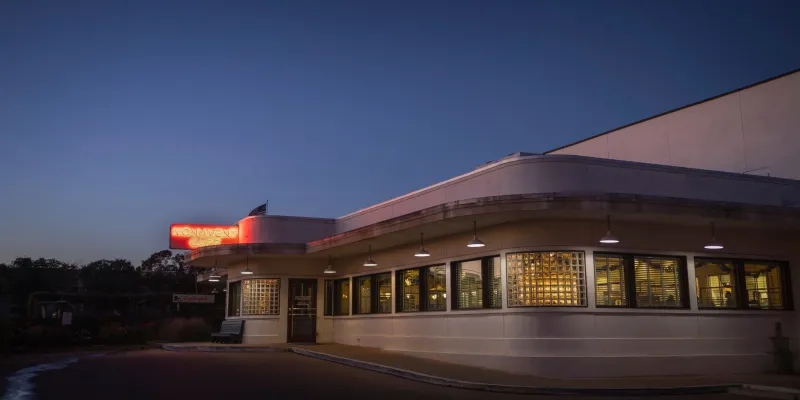
Somewhere in the American Midwest, there is a person who will absolutely lose their mind if you suggest that their beloved regional fast-casual chain is "basically the same" as whatever national equivalent you're comparing it to. They will look at you the way you look at someone who says all coffee tastes the same. They will not be okay.
And honestly? We get it.
There's something happening right now in the way people relate to brands — especially food brands — that's worth paying attention to. Call it the Comfort Brand Era. It's the moment when a chain restaurant with thirty locations becomes someone's entire personality, and they wear that devotion like a badge of honor.
The Anti-Mainstream Reflex
For years, the cultural playbook said that bigger was better. National brands meant reliability. A McDonald's in Montana was supposed to feel the same as a McDonald's in Miami, and that sameness was the whole point. Consistency was king.
But something shifted. Maybe it was the pandemic, which made people hyper-aware of local businesses and what it means to lose them. Maybe it was the rise of "authenticity" as a cultural currency. Maybe it's just that people are exhausted by the monoculture and are desperately looking for something that feels like theirs.
Whatever the cause, the effect is real: a growing chunk of millennials and Gen Z consumers are developing the kind of fervent, almost irrational loyalty to obscure regional chains that used to be reserved for sports teams and music artists.
Take Runza, the Nebraska-based chain that's been selling its signature meat-and-cabbage pastry since 1949. Ask a Nebraskan living out of state about Runza and watch their eyes go glassy with longing. There are Facebook groups dedicated to people who've moved away and are desperately trying to recreate the Runza experience in their new kitchens. There are road trips planned specifically around stopping at one.
Or consider Whataburger, which has been a Texas institution for decades. When the chain started slowly expanding into other states, longtime fans had feelings about it — complicated, possessive feelings, like when your favorite underground band gets a major label deal.
Scarcity Is the New Celebrity Endorsement
Here's the thing about a brand you can only access in certain zip codes: it becomes a souvenir of place and identity. When you can't get it everywhere, getting it somewhere means something.
Marketing experts have long understood that scarcity drives desire, but regional food chains create a different kind of scarcity — one that's tied to memory and geography rather than manufactured hype. You don't love Zaxby's because an influencer told you to. You love it because it was what your family ordered on Friday nights after football games in Georgia, and now every time you eat there, you're not just eating chicken — you're time-traveling.
That emotional architecture is almost impossible to manufacture at scale. National chains throw millions at celebrity partnerships and social media campaigns trying to replicate what a regional joint builds organically over decades. And increasingly, it's not working.
Consumers — especially younger ones — are pretty good at detecting when affection is being performed for them versus when it's genuine. A regional chain that's been making the same recipe since 1962 doesn't need to tell you it has "real ingredients" or "authentic flavor." Its entire existence is the proof.
The Community Effect
What really seals the deal isn't just the food itself — it's the community that forms around it. And in the social media age, those communities have gone from local to global in ways that are genuinely fascinating.
There are subreddits dedicated to individual regional chains. There are TikTok accounts that have gone semi-viral just by documenting someone's first experience with a beloved local institution. There are Discord servers where people swap tips on how to recreate specific menu items at home.
This is GoLike behavior in its purest form: finding something you love, sharing it, and suddenly realizing there are thousands of other people out there who love it just as much. The niche becomes a community. The community becomes an identity.
And for the brands themselves, this organic devotion is worth more than any ad buy. When your customers are your evangelists — when they're genuinely upset at the idea of you expanding too fast or changing your recipe — you've built something that money can't easily replicate.
What This Means for How We Connect to Places
There's a deeper current running through all of this. The Comfort Brand phenomenon is partly about food, but it's really about belonging — about having something that marks you as from somewhere, in an era when so much of culture feels placeless and algorithmic.
In a world where we're all watching the same Netflix shows and scrolling the same TikTok trends, the fact that you grew up going to a specific regional chain that nobody else has heard of is a form of cultural distinctiveness. It's a story. It's a conversation starter. It's a way of saying, I am from a specific place, and that place has flavors.
And maybe that's why the loyalty runs so deep. It's not really about the burger or the chicken or the biscuits. It's about the feeling of having something that's genuinely, specifically yours — in a cultural landscape that often feels like it was designed for everyone and therefore for no one.
So yeah. Drive the forty-five minutes. Get the thing. You don't owe anyone an explanation.