The Gatekeepers of the Forgotten: Meet the People Keeping Obscure Art Alive
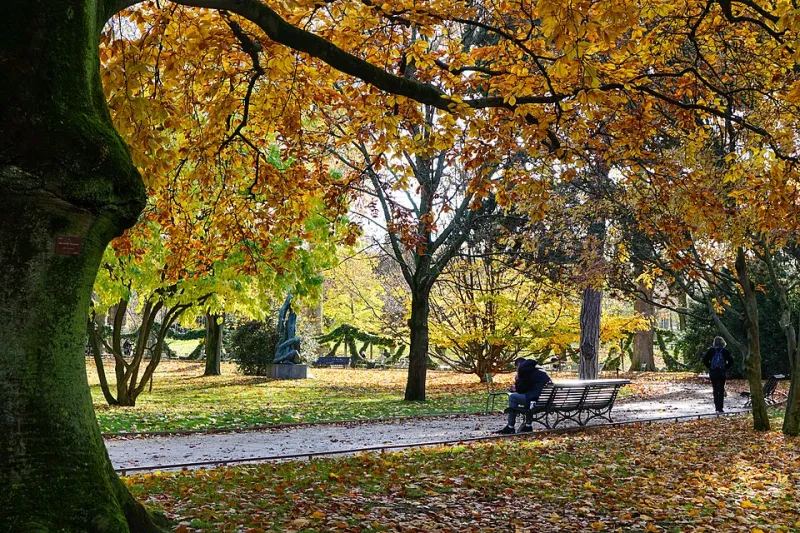
Photo: Visitor7, CC BY-SA 3.0, via Wikimedia Commons
Somewhere in Portland, Oregon, there's a guy named Derek who has spent the last eleven years tracking down VHS copies of obscure 1980s science fiction films that never made it to DVD. He's catalogued over 340 titles. He runs a newsletter with about 800 subscribers. He has never once described what he does as a hobby. "It's more like a responsibility," he told us. "These things existed. People made them. They deserve to not just disappear."
Derek is not unusual. He's part of a loose, passionate, surprisingly large community of people who have dedicated meaningful chunks of their lives to championing media that the mainstream forgot, ignored, or never noticed in the first place.
And in an era where the algorithm decides what most people watch, read, or play, these people might be doing something more important than they realize.
Why the Obscure Hits Different
There's a particular feeling that comes with finding something great that almost nobody else knows about. It's hard to describe without sounding insufferable, but it's real: a combination of discovery, ownership, and the slightly guilty pleasure of knowing something other people don't.
Meg, a 34-year-old librarian in Austin who runs a blog dedicated to overlooked literary fiction from the 1960s and 70s, describes it as "finding a twenty in a coat you forgot you owned. Except the twenty is a novel that makes you feel things you didn't know you could feel."
Psychologists who study media engagement have a name for this: the discovery premium. The value we assign to something isn't purely about the quality of the thing — it's also about the story of how we found it. A film you stumbled across at 2 AM on a streaming service nobody uses hits differently than a film you watched because it was number one on the charts.
The obscure discovery story is inherently more interesting to tell. And humans, being the storytelling creatures we are, respond to that.
The Communities Doing the Work
What's striking about the world of forgotten media is how organized it's become. This isn't just isolated collectors talking to themselves — it's a functioning ecosystem of preservation, curation, and genuine community.
Letterboxd has become one of the most important spaces for film obscurists. The platform's list and review features have enabled thousands of users to build detailed catalogs of underseen films, creating a parallel recommendation economy that runs entirely on passion rather than algorithm. Some Letterboxd users have amassed followings in the tens of thousands not because they review prestige films, but because they've become the definitive sources for specific micro-niches: Italian giallo films, 1990s straight-to-video action, forgotten New Hollywood era experiments.
In the gaming world, the preservation community is doing arguably more urgent work. Video games face a genuine extinction crisis — a 2023 study found that roughly 87% of classic video games are no longer commercially available, existing only in private collections or gray-area archives. Groups like the Video Game History Foundation are fighting to change copyright laws to allow proper preservation, while thousands of individual collectors are digitizing and documenting games that would otherwise be lost entirely.
"We're not pirating for fun," says James, a 28-year-old software engineer in Chicago who has spent over $40,000 acquiring and preserving rare arcade boards. "We're doing what libraries do with books. Except nobody's funding us and the law is kind of ambiguous about whether we're allowed to."
The Book People
The literary version of this world is quieter but equally devoted. Small press publishers like New York Review Books, Archipelago, and Ugly Duckling Presse have built entire business models around rescuing overlooked literature — translations that never found a wide audience, midcentury American novels that went out of print, poetry collections that got one print run and vanished.
Meg's blog, which she started in 2019 as a way to process her own reading, now gets around 12,000 monthly visitors. "I never expected anyone to care," she says. "I thought I was writing into a void. But there are so many people out there who want to read something that isn't being pushed by a major publisher or an influencer. They just don't know where to look."
Her most-read post is about a 1971 novel by a woman writer who published three books, got decent reviews, and then essentially vanished from the literary record. Meg found it at an estate sale. The post has been shared thousands of times and the book — which had been out of print for decades — was picked up by a small press reprint publisher last year.
That's not a small thing. That's what this community actually does.
Is It About the Art or the Identity?
It would be easy — and a little lazy — to dismiss the obscurity obsession as pure gatekeeping ego. And honestly, there's some of that in every subculture. The person who loudly announces they liked a band "before they were cool" is a real and mildly exhausting archetype.
But the people doing serious preservation and curation work are mostly motivated by something more genuine: a real belief that quality doesn't always win, that the market is an imperfect filter, and that great art deserves an audience regardless of whether it was commercially successful.
Derek puts it well: "The movies I care about aren't obscure because they're bad. A lot of them are obscure because they were weird, or made by women, or made by Black directors when that wasn't supported, or just released at the wrong time. The obscurity is usually about the industry, not the art."
That reframing matters. The forgotten isn't always the failed. Sometimes it's the overlooked.
How You Can Explore This World
You don't need to spend $40,000 on arcade boards to participate. The entry points are genuinely accessible:
Letterboxd is free and has more curated obscure film lists than you could watch in a lifetime. Start with a genre you already love and find the "underseen gems" lists.
Your local library almost certainly has access to the Kanopy streaming service, which is free with a library card and has an extraordinary catalog of arthouse and international cinema that never made it to mainstream platforms.
Used bookstores are portals. Give yourself an hour, no specific goal, and a budget of $20. You will find something.
Niche subreddits and Discord servers exist for essentially every forgotten media category imaginable. These communities are almost universally welcoming to newcomers who come in with genuine curiosity rather than gatekeeping energy.
The forgotten is out there. It's waiting. And there are people who've dedicated years to making sure you can find it — if you want to.
That feels like something worth knowing about.