Infinite Options, Zero Discovery: How Recommendation Engines Quietly Killed the Thrill of Finding Something New
Remember the last time something completely blindsided you — a song you'd never heard of that hit differently, a movie you stumbled onto at midnight that you're still thinking about three years later, a book a stranger on a train told you to read? That kind of discovery used to happen all the time. Now it almost never does.
And the weird part? We have more content available to us than any generation in human history. Spotify has over 100 million tracks. Netflix adds dozens of titles every single month. TikTok serves up an endless vertical scroll of stuff supposedly curated just for you. We are swimming — drowning, really — in options. So why does everything feel vaguely familiar?
The answer, frustratingly, is the thing that was supposed to fix this problem: the algorithm.
The Paradox Nobody Warned Us About
Here's how recommendation engines work in the simplest terms: they watch what you engage with, find patterns, and serve you more of the same. The more you interact with something, the more confidently the system thinks it knows you. It's efficient. It's logical. It's also, over time, kind of suffocating.
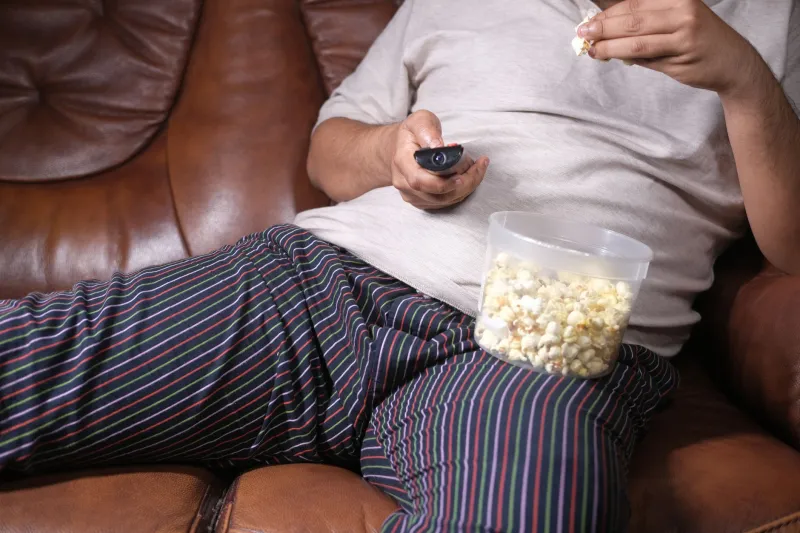
Researchers call it a "filter bubble" — the phenomenon where personalization systems gradually narrow your information environment until you're basically living in an echo chamber of your own past preferences. You liked one indie folk playlist in 2019, and now Spotify thinks you're a person who only likes indie folk. You watched a true crime documentary once, and suddenly Netflix's entire homepage is blood and courtrooms.
The algorithm isn't trying to trap you. It's optimizing for engagement, which is tech-speak for "keeping you on the platform as long as possible." And the easiest way to do that isn't to challenge you — it's to comfort you.
Creators Feel It Too
It's not just listeners and viewers getting squeezed. Artists, filmmakers, and independent creators are caught in the same machine from the other side.
Musicians who make genre-blending work — the kind of stuff that used to define entire cultural moments — describe being systematically buried because their music doesn't fit neatly into a playlist category. A Nashville-based artist who blends country storytelling with R&B production told us she can't get algorithmic traction on any platform because she's "too country for the R&B curators and too R&B for the country ones." Her music lives in a gap the algorithm doesn't know how to file.
Filmmakers talk about a similar squeeze on streaming platforms. Experimental or genre-hybrid projects get lost because recommendation engines don't know where to put them — and if the system can't confidently suggest your work to an existing audience, it essentially doesn't suggest it at all. The result is a quiet but powerful pressure toward the familiar, the categorizable, the safe.
What this means for culture at large is genuinely worth worrying about. The stuff that changes everything — the weird, the hybrid, the hard-to-categorize — is exactly what recommendation engines are worst at surfacing.
Why Serendipity Actually Mattered
There's a reason people get nostalgic about record stores, video rental shops, and flipping through a friend's CD collection. Those experiences had friction — you had to browse, you had to take a chance, you had to trust a handwritten recommendation from someone whose taste you didn't fully understand yet. That friction was the whole point.
Serendipity isn't just a nice feeling. It's how taste actually develops. You don't grow by consuming more of what you already know you like — you grow by bumping into something that surprises you, that challenges your assumptions, that makes you think "I didn't know I needed this until right now."
Algorithms are great at giving you what you want. They're terrible at giving you what you didn't know you wanted. And that second thing? That's where the magic lives.
Breaking Out of the Loop
The good news is you're not stuck. The algorithm is powerful, but it's not inescapable. Here are some practical ways to start finding genuinely unexpected things again.
Go human-curated, intentionally. Seek out recommendations from actual people — not influencers performing taste, but friends, strangers in niche Reddit threads, or independent music blogs that still exist if you go looking. A real person's offhand recommendation carries information that no machine can replicate.
Use the platforms against themselves. On Spotify, try the "Radio" feature seeded from an artist you've never heard of — not one you already love. On YouTube, search for something completely outside your usual content and follow that rabbit hole for a session. You're essentially confusing the algorithm, which is a feature, not a bug.
Go back to browsing. Physical spaces like independent bookstores, record shops, and video rental spots (yes, a handful still exist and they're incredible) force you to encounter things you never would have searched for. The cover catches your eye. You pick it up. You take a chance. That's it. That's the whole discovery engine.
Try the "one degree removed" trick. Instead of looking up more stuff by artists you love, look up who they love. Read an interview where a musician talks about their influences. Watch a director's list of their favorite films. You're essentially hacking into a human taste network rather than a data-driven one.
Give unfamiliar things a real chance. The algorithm has trained us to bounce fast — if something doesn't hook us in thirty seconds, we're gone. Try sitting with something uncomfortable for longer than feels natural. Some of the best things don't announce themselves immediately.
The Bigger Picture
None of this is an argument for throwing your phone into the ocean or canceling your streaming subscriptions. These tools are genuinely useful, and they do occasionally surface something great. But it's worth being honest about what they're optimizing for — and recognizing that "more engagement" and "genuine discovery" are not the same goal.
GoLike exists because people want to share what they actually love, not just what an algorithm decided they should love next. Real taste is messy and personal and sometimes embarrassing and almost always shaped by a weird chain of accidents and recommendations and late-night rabbit holes. That's the stuff worth protecting.
The algorithm knows a lot about you. But it doesn't know everything. And the things it doesn't know? That's where your next favorite thing is hiding.