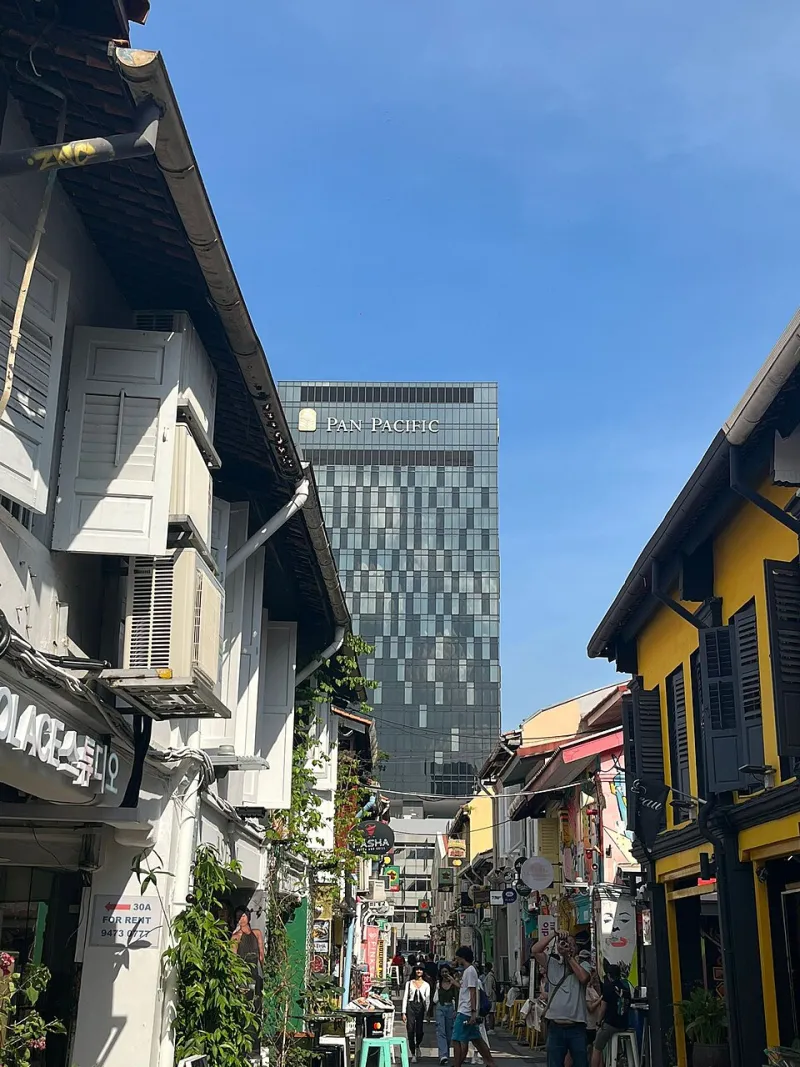
Hometown Famous: The TikTok Creators Turning Their Small Towns Into Must-See Destinations
Photo: Photograph by Mike Peel (www.mikepeel.net)., CC BY-SA 4.0, via Wikimedia Commons
Somewhere in eastern Kentucky, a woman is filming herself eating a chocolate gravy biscuit at a diner that's been open since 1962. She's explaining, with the particular pride of someone who grew up on this stuff, exactly why it's better than anything you'll find at a brunch spot in Nashville. Her comment section is losing its mind — half the people saying we have this too!! and the other half saying wait, chocolate gravy is a THING?
This is the hyper-local TikTok moment, and it is absolutely thriving.
The Algorithm Didn't Plan This, But It Loves It
For a long time, the conventional wisdom about building an audience online was that you needed to appeal broadly. Universal topics, aspirational aesthetics, content that could land anywhere from Miami to Minneapolis without needing any context. The travel content that dominated Instagram for years was a perfect example — gorgeous, placeless, optimized for maximum wow and minimum specificity.
Then TikTok's algorithm did something interesting. It turned out that specificity was its own kind of magnet. A video about a regional chain that only exists in six states in the Southeast would rack up millions of views because half the viewers were screaming I GREW UP ON THAT while the other half were fascinated by something they'd never heard of. Both reactions drove engagement. Both reactions got the video pushed further.
The creators who figured this out early — the ones who leaned into their particular geography instead of away from it — built some of the most passionate, loyal audiences on the platform.
The Charm of "You Have to Be From Here to Understand"
There's a specific pleasure in content that makes you feel like an insider. When a creator from a small town in Louisiana explains the difference between Cajun and Creole cooking not as a food writer explaining it to outsiders, but as someone who grew up having arguments about it at family dinners — that specificity is the whole point. It's not a travel guide. It's a love letter, and love letters are compelling reading even when they're addressed to someone else.
Creators in this space tend to share a few traits. They're deeply, genuinely proud of where they're from — not in a defensive way, but in the way of someone who's noticed that their home has been overlooked and finds that both frustrating and kind of funny. They've developed a fluency in the local that lets them explain regional things to outsiders without losing the thread of what makes those things special to insiders.
And they're often hilariously specific. Not "small town food," but this gas station, this church potluck dish, this particular way people in their county pronounce a word that the rest of the state doesn't.
Putting Places on the Map (Literally)
The downstream effects of this kind of content on actual travel are real and measurable. Tourism boards in states like Arkansas, West Virginia, and Mississippi — places that don't exactly dominate travel bucket lists — have started paying attention to what hyper-local creators are doing for their regions in ways that years of official tourism marketing never managed.
When a creator from a small town in the Mississippi Delta posts a series about local juke joints, tamale spots, and blues history, and that series gets two million views, the comments fill up with people asking for directions. Some of them actually show up. Local businesses that have never had a review on Yelp suddenly have a line out the door on a Saturday because someone in Ohio saw a TikTok and made it a road trip.
This is a genuinely new kind of travel content — not aspirational, not curated, not filtered through the lens of "places worth visiting according to people who've already visited everywhere." It's discovery by proxy, through someone who actually lives there and has opinions about which gas station has the best fried chicken.
The Accent Thing Is Its Own Whole Genre
One of the most delightful subgenres of hyper-local content is the accent and regional dialect video. Creators from Appalachia, the Gulf Coast, rural New England, and the Texas Hill Country have built enormous followings just by explaining how their people talk — the specific vocabulary, the rhythm, the words that have no equivalent anywhere else.
These videos do something genuinely useful culturally. They push back on the long-running media habit of treating regional American accents as either comedic or indicative of a lack of sophistication. A creator who explains, with obvious affection and zero apology, exactly why people from her county say "might could" is doing something subtly important: she's making her home legible on its own terms.
For viewers from similar places, it's deeply validating. For viewers from elsewhere, it's a window into an America that doesn't usually get this kind of attentive, affectionate treatment.
What This Means for How We Think About "Interesting Places"
The implicit argument running through all of this content is that interesting is everywhere, and that the places travel media has historically ignored aren't boring — they just haven't had the right storyteller yet. A creator from rural Montana who documents the specific rituals of small-town rodeo culture isn't making content about a niche. She's making content from a perspective that's been absent, and it turns out a lot of people were waiting for exactly that.
GoLike has always been about finding the things that genuinely move you, not just the things you're supposed to be moved by. And there's something that feels very aligned with that in a creator who's decided that their hometown — the place everyone they grew up with was trying to leave — is actually worth a second look. Worth a camera. Worth sharing.
The Road Trip These Creators Are Building You
Here's a fun thought experiment. Pull up TikTok and search your state plus the word "local" or "hometown." Give it ten minutes. There's a decent chance you'll find someone who's been quietly documenting a version of your region — or a neighboring one — that you've driven past a hundred times without really seeing.
And if that creator has good taste and a genuine love for what they're showing you, you might just find yourself planning a weekend trip to a place you'd never have considered. Not because a magazine told you to. Not because it showed up on a "best of" list. But because someone who actually lives there made you feel like you'd be missing something if you didn't go.
That's the whole thing, really. That's the magic of knowing where to look.